
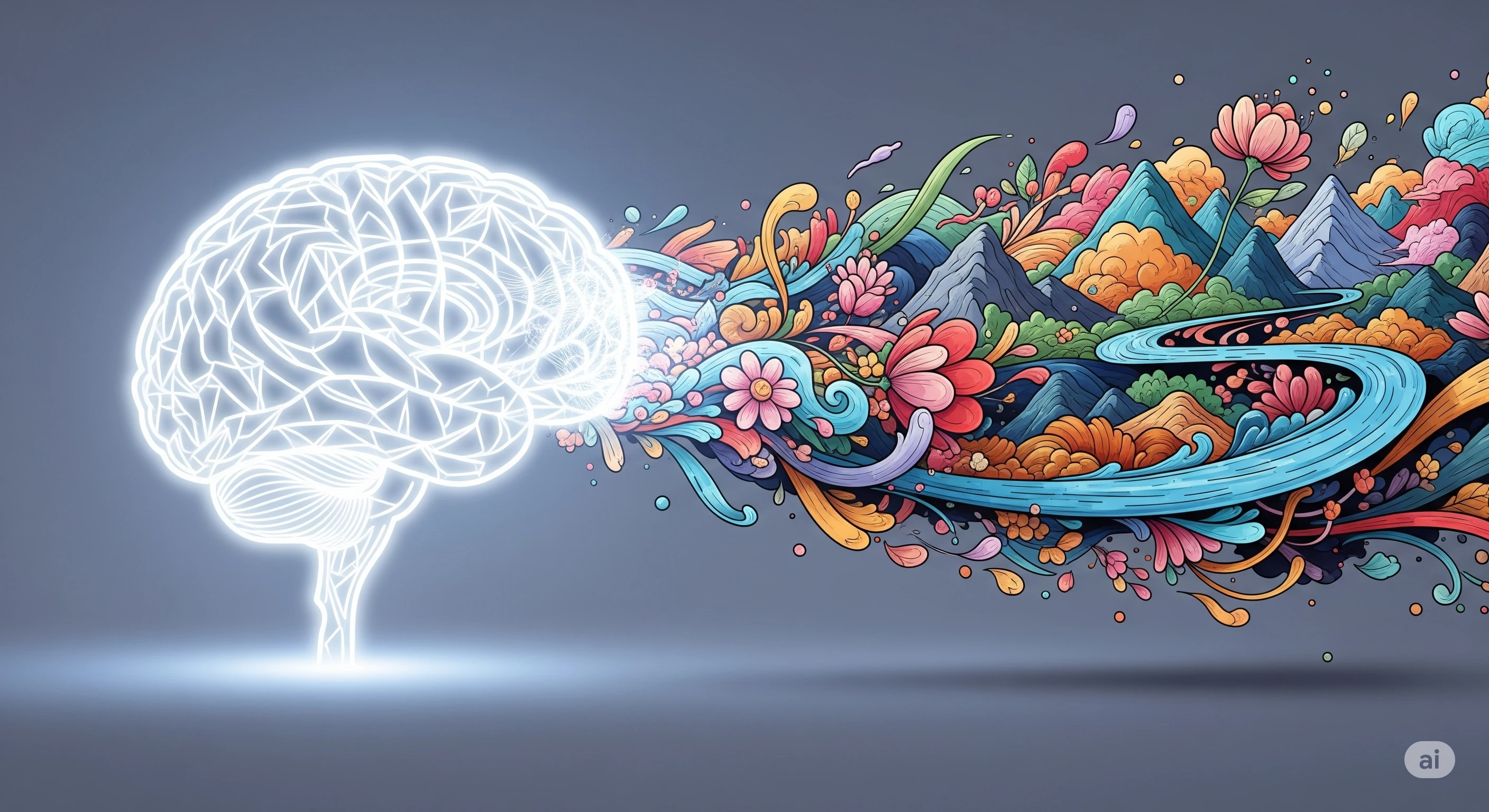
Control the Style: From Photorealism to Fantasy
Reading time: approximately 8 minutes
Now that you know the basics of describing what should be in the image, it is time to learn to control how the image should look. By adding words that describe artistic style, camera angles and lighting, you can dramatically change the expression in your AI-created images.
What You Will Learn
- How to specify artistic styles (for example, "oil painting", "comic book style").
- How to control the camera (for example, "close-up", "bird's eye view").
- How to use lighting to create mood (for example, "dramatic lighting", "golden hour").
The Basics
Additional words, or modifiers, are usually added at the end of the prompt. They specify not the content, but the execution.
Structure: [Content description], [Style/Technique], [Light/Mood], [Composition/Camera]
Practical Examples
Let us use the same basic prompt but with different modifiers: Basic Prompt: An old fisherman in a small wooden boat on a stormy sea
| Modifier | Example of Added Text | Potential Result |
|---|---|---|
| Artistic Style | , in the style of Van Gogh | An image with swirling brushstrokes and strong colors. |
| Technical Style | , technical drawing, blueprint | A schematic image, like an engineering drawing. |
| Photorealism | , hyperrealistic photography, 8k | An image that is difficult to distinguish from a real photo. |
| Lighting | , dramatic lighting, moonlight | A dark and atmospheric scene where the light from the moon hits the waves. |
| Camera Angle | , wide angle, seen from above | An image showing the small boat in the large, overwhelming sea. |
Create Consistent and Atmospheric Material
- Create a unified visual language: Are you going to create material for an entire theme area, for example "Ancient Greece"? Decide on a style modifier, for example
in the style of Greek vase painting, and use it in all your prompts. This gives your material a professional and cohesive appearance. - Set the right mood: Create images that reinforce the message in your lesson. Use
soft morning light, pastel colorsfor a lesson about spring in biology, ordramatic lighting, shadows, close-upto create an exciting image for a history lesson about a darker event.
Next Steps
You now have a powerful toolbox for creating varied and specific images. In the next moment, "Practical Applications in Science and Social Studies Subjects", we move on to concrete examples of how this technique can be used to visualize complex concepts in natural and social sciences.